Interview:
Inside Japan Selection
Shiki Theatre Company — The Boy and the Beast

Founded in 1953, Shiki Theatre Company is Japan’s largest theatre company, with approximately 1,700 members, including around 700 performers, 550 artistic and technical staff, and 450 administrative professionals. The company operates seven dedicated theatres across Japan and has built its reputation through long-running productions of internationally acclaimed musicals such as The Lion King, Cats, and The Phantom of the Opera. In 2018, Shiki established its Creative Development Department to develop and produce original musicals. Its latest production, The Boy and the Beast, marks the company’s most ambitious original work to date. Since premiering in 2022, the production has enjoyed a successful run in Tokyo, Osaka, and Nagoya, attracting more than 504,000 people. It was also named the No. 1 musical of the year by Japan’s leading musical theatre magazine, earning widespread recognition as one of Japan’s most acclaimed original musicals.
Adapting an animated film rooted in Japanese culture

The Boy and the Beast is based on Mamoru Hosoda’s award-winning 2015 animated feature of the same title, which received the Japan Academy Prize for Animation of the Year. The story follows a lonely human boy, Kyuta, who forms an unlikely bond with the beast Kumatetsu. Both have been raised without a family, but the two develop a relationship that is stronger than blood.
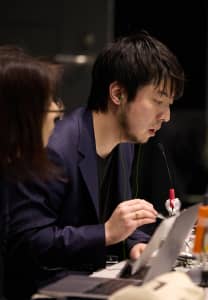
Producer Chiemi Kawai explains:
”Through the interaction between a lonely boy and an awkward beast,the story explores the strength required to confront one’s own weaknesses. It also reminds us that people are raised by many others before eventually becoming someone who supports the next generation. The boy and the beast gradually become like parent and child despite frequent conflicts. Those around him lend a hand to the boy as he struggles to find his identity. The work celebrates the importance of walking through life together with those we cherish.
We believe these themes of accepting people beyond family ties and cultural differences, and how we celebrate personal growth, are relevant to contemporary society.”
The story is also deeply rooted in Japanese culture and spirituality. The Beasts are portrayed as unique beings that exist apart from both gods and humans. In this world the Grand Master who has ruled over the realm of the Beasts is reincarnated as one of the Yaoyorozu no Kami, the divine spirits that reside in all things, including mountains, rocks, and everyday tools. Among the main characters, Kumatetsu was inspired by Kikuchiyo, the character portrayed by Toshiro Mifune in Akira Kurosawa’s classic film Seven Samurai. Like Kikuchiyo, Kumatetsu is a rough and uncouth figure with little regard for proper manners, yet beneath his gruff exterior lies profound compassion and an unwavering sense of conviction. Preserving these shared qualities was considered an essential element in bringing the character to life for this production.
Kawai explains:
“The human world is set in modern-day Shibuya, where relationships often feel distant and superficial. In contrast, the realm of the Beasts is warm and tightly connected. Kumatetsu is far more than simply a powerful Beast. He is a deeply human character who carries forward the essence of the samurai as immortalised in the history of Japanese cinema. That is precisely why we paid such close attention to how to express his humanity on stage. Together with director Go Aoki and the cast, we devoted ourselves to shaping the role with great care and attention to detail.”
Realising this distinctive world on stage became the central creative challenge of the production. A diverse team of artists specialising in puppetry, prosthetic makeup, action choreography, stage magic, projection, and visual effects collaborated to bring the fantastical creatures, vibrant festival scenes, and dynamic battles to life. The production also
deliberately contrasts the emotionally detached human world with the warm, community-oriented Beast world while cleverly reusing elements of the same stage set to reveal that the two worlds are ultimately reflections of one another.The script and the musical score draw inspiration not only from the animated film but also from the original novel adaptation, with every creative decision carefully developed alongside the original creative team.
One of the key factors behind the success of this production has been close and careful collaboration with the original creators. Throughout the development of The Boy and the Beast, Shiki worked closely with Studio Chizu, the original animation studio, holding extensive creative discussions to faithfully translate the film’s unique artistic vision into a theatrical experience. Looking ahead, Shiki hopes to recreate The Boy and the Beast with local creative teams, casts, and production staff in theatres around the world, allowing the work to evolve while remaining true to its original spirit.
Quality theatre built on talent, discipline, and teamwork
Since its founding in 1953 by Keita Asari and nine fellow university students, Shiki has created high quality works. Today, its repertoire spans international musicals, original Japanese musicals, straight plays, and productions for young audiences. In addition to its seven dedicated theatres, the company regularly tours major cities throughout Japan, presenting approximately 3,000 performances annually to nearly three million audience members, making it the country’s largest theatre company.
During the past decade alone, productions including Aladdin, An American in Paris, Frozen, Back to the Future, and original musicals by the Creative Development Department including A Robot in the Garden, The Boy and the Beast, and The Ghost & the Lady have all been recognised as Japan’s top musical production in the Musical Best Ten ranking of Japan’s leading musical magazine. Shiki’s repertoire appeals to audiences across multiple generations.
For many children in Japan, it is not uncommon for a Shiki performance to be their first experience of professional theatre. Through Kokoro no Gekijo, the company invites elementary school students from across Japan to the theatre free of charge. In How to Speak Beautiful Japanese, an outreach programme conducted in primary schools, Shiki actors teach children how to speak Japanese based on the company’s own methodology. Through initiatives such as these, Shiki also places emphasis on social contribution through theatre.
At the base of everything Shiki does, is the value placed on the work itself and the strict meritocracy that governs its team. In Japan, many shows use the fame of their star actors to promote their show. However, Shiki does not rely on its actors for recognition, rather it uses the power of the work itself. The technique and skill of touching people’s hearts through acting, are more important for the actor than fame. Actors work to make the work shine, not the other way around. There are rigorous internal auditions and intensive training for the company’s 700 performers. Because audiences trust that every performance will meet the same high artistic standard, Shiki has been able to sustain long-running productions lasting many years without depending on individual celebrities.
That merit-based approach is supported by daily training conducted in the company’s dedicated rehearsal studios, research facilities, and training centers. Based on Shiki’s unique training methods, particular emphasis is placed on vocal clarity and precise delivery, ensuring that every word in the script is delivered clearly and accurately to the audience. The teamwork fostered through this training results in a highly disciplined and cohesive ensemble style, earning admiration even among audiences familiar with international productions. Some theatergoers even specifically seek out Shiki’s interpretations of musicals performed around the world.
At the time of its founding, the company primarily staged straight plays based on French works such as Antigone. In 1964, however, it premiered The Emperor’s New Clothes, its first original musical for children. Since then, Shiki has created numerous original musicals, including Yuta and Enchanted Friends (1977), A Dream Within A Dream (1987), and the acclaimed History Trilogy, Musical Rikoran (1991), Musical Ikoku No Oka (2001), and The Southern Cross (2004). In 2018, with the goal of creating a new generation of landmark original musicals, Shiki established its Creative Development Department, dedicated to the planning and production of original musicals. Its first major project, A Robot in the Garden (2020) marked the company’s first newly developed original musical in 16 years (excluding musicals for children). Created in collaboration with an emerging Japanese playwright and director, the production delivered a heartfelt story centered on Shiki’s enduring message that “life is worth living,” earning widespread acclaim from audiences across Japan.
This was followed by The Ghost & the Lady (2024) based on a popular Japanese manga and created by a team of Japanese and international artists. The production became a major box-office success, with all performances selling out well before its final show.
Sharing Japanese stories with the global musical theatre community
For international productions of The Boy and the Beast, Shiki intends to build upon the carefully developed from the original animation script and score while adapting the work to suit the region. Through close collaboration with local creative teams and producing partners, the company aims to present the story in ways that resonate most powerfully with local audiences.
Beyond this production, Shiki hopes that these collaborations will establish lasting creative partnerships. By demonstrating that Shiki is both an inspiring and reliable collaborator, the company ultimately seeks to co-develop entirely new works designed for global audiences from the very beginning.
Having brought many international musicals to Japanese audiences through translation and adaptation, Shiki believes the time has come to take the next step by creating original works rooted in the cultures, philosophies, and artistic traditions of the East, offering perspectives that are rarely represented on the global musical stage.
Kawai concludes:
“Even if it means taking greater risks, we will never compromise on quality. That commitment will remain unchanged as we expand internationally. We hope to meet creators around the world who share our passion for making truly exceptional theatre together.”
Original Text by Momoko Kawano
Translated by SOIL Team